
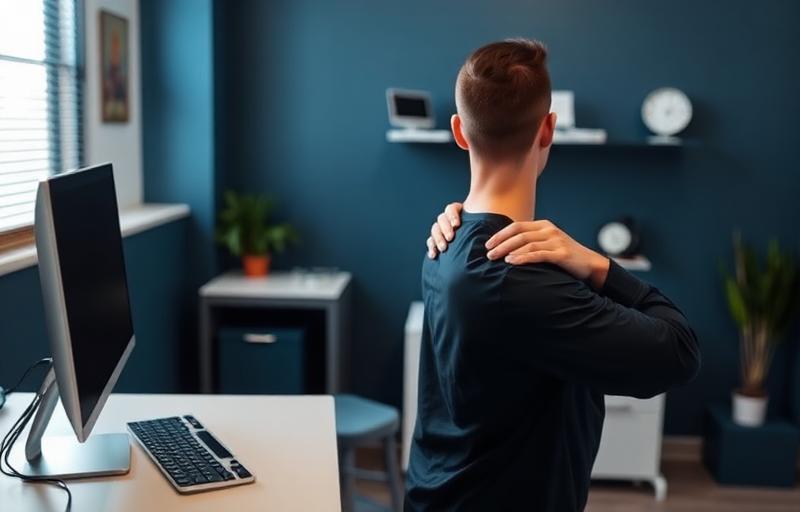
The Hidden Physical Cost of Office Work
Most London professionals spend 8-10 hours per day in a seated position. While this may not feel physically demanding, the sustained postures involved create predictable patterns of muscle tension that, left unaddressed, lead to chronic pain and restricted mobility.
Understanding these patterns is the first step toward managing them effectively.
Upper Crossed Syndrome: The Desk Worker's Pattern
Prolonged screen work creates a characteristic pattern: tight upper trapezius and pectoral muscles pull the shoulders forward and the head into a forward position, while the deep neck flexors and lower trapezius become weakened. This 'upper crossed syndrome' is responsible for the majority of desk-related neck and shoulder complaints.
The result is chronic tension across the tops of the shoulders, pain at the base of the skull, and tension headaches that no amount of paracetamol fully resolves.
Lower Back and Hip Tension
Sitting for extended periods shortens the hip flexors and weakens the gluteal muscles. This shifts load onto the lower back, creating chronic lumbar tension that many desk workers accept as normal.
Combined with a weakened core from prolonged sitting, this pattern can lead to persistent lower back pain that affects not just work comfort but also exercise performance and daily activities.
Practical Strategies for Managing Desk Tension
Movement breaks every 30-45 minutes significantly reduce tension accumulation. Even standing for 2 minutes and performing simple shoulder rolls and hip flexor stretches can interrupt the cycle.
Ergonomic adjustments — screen at eye level, keyboard at elbow height, feet flat on the floor — reduce the strain of sustained postures. However, even perfect ergonomics cannot eliminate the need for regular movement.
How Sports Massage Helps Desk Workers
Regular sports massage addresses desk-related tension at a deeper level than stretching alone can achieve. Targeted treatment of the upper trapezius, levator scapulae, suboccipital muscles, and hip flexors directly counteracts the patterns created by prolonged sitting.
Many London professionals schedule fortnightly posture treatment sessions as part of their wellness routine, finding that it significantly reduces headache frequency, improves sleep quality, and enhances comfort during the working day.
If desk-related tension is affecting your work or quality of life, a posture-focused massage treatment can provide both immediate relief and a long-term management strategy.
Related Treatments
Previous Article
5 Ways Sports Massage Improves Running Performance
Next Article
A Practical Guide to Stretching for Injury Prevention
Ready to Book?
Get in touch to discuss your treatment needs or book your next session.