
Why Recovery Deserves as Much Attention as Training
Adaptation — the process by which your body gets stronger, faster, and more resilient — happens during recovery, not during training. Yet most athletes and gym users devote far more attention to their workouts than to what happens between them.
Optimising recovery means you can train harder, more consistently, and with lower injury risk. It's arguably the most underutilised performance tool available.
The Limitations of Self-Massage Tools
Foam rollers, massage guns, and lacrosse balls have become ubiquitous in gyms across London. They provide useful self-maintenance between professional treatments, but they have significant limitations.
Self-massage tools cannot provide the assessment, specificity, or depth of treatment that a skilled sports massage therapist delivers. They're excellent as supplements, but they shouldn't replace professional soft tissue work.
Nutrition and Hydration Timing
Post-exercise nutrition within 30-60 minutes supports muscle repair. Protein provides the amino acids needed for tissue repair, while carbohydrates replenish glycogen stores. Hydration supports circulation and nutrient delivery to recovering muscles.
Sleep: The Ultimate Recovery Tool
Growth hormone — essential for tissue repair — is released primarily during deep sleep. Athletes and active individuals should prioritise 7-9 hours of quality sleep, particularly during heavy training phases.
Sports massage can improve sleep quality by reducing muscle tension and activating the parasympathetic nervous system, creating a positive feedback loop for recovery.
Professional Sports Massage for Recovery
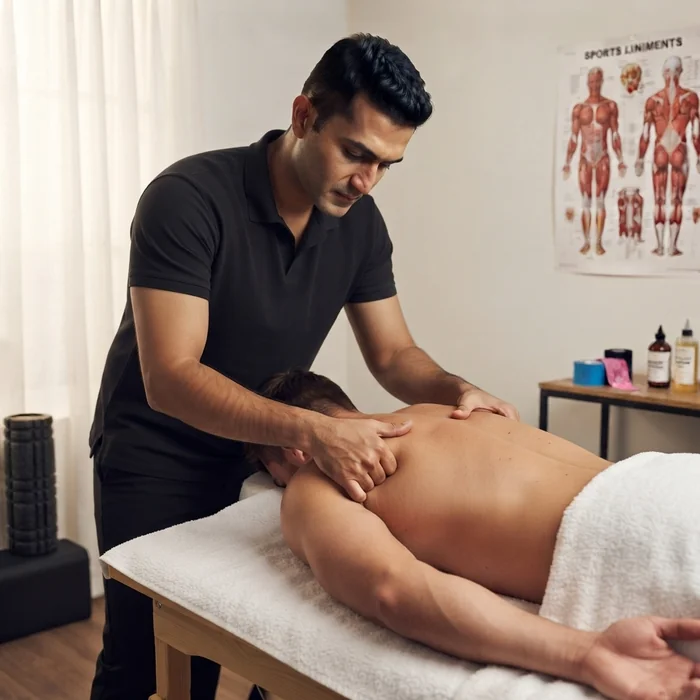
Regular sports massage is the most effective recovery tool available to athletes and active individuals. It addresses issues that self-care cannot reach, provides expert assessment of tissue condition, and supports consistent high-quality training.
For active individuals in Central London, scheduling regular sports massage creates a structured recovery framework that supports long-term training consistency and injury prevention.
Related Treatments
Previous Article
Deep Tissue vs Sports Massage: Which Do You Need?
Next Article
Preventing Gym Injuries with Regular Sports Massage
Ready to Book?
Get in touch to discuss your treatment needs or book your next session.